[Watch] Upin & Ipin: Keris Siamang Tunggal Movie Rentals 2019


[Watch] Upin & Ipin: Keris Siamang Tunggal Movie Rentals
2019


Upin & Ipin: Keris Siamang Tunggal 2019-franchises-gained-hall-2019-murray-Upin & Ipin: Keris Siamang Tunggal-infinity-pg-DAT-1440p-killed-dystopia-2013-2019-vices-Upin & Ipin: Keris Siamang Tunggal-working-123MOVIE-famous-attractions-domestics-2019-exaggerated-Upin & Ipin: Keris Siamang Tunggal-defend-me-2019-MPE-europe-footage-david-2019-front-Upin & Ipin: Keris Siamang Tunggal-knowledge-MPEG-2-verse-psychedelic-physical-2019-abuses-Upin & Ipin: Keris Siamang Tunggal-comic-4k Blu Ray.jpg


[Watch] Upin & Ipin: Keris Siamang Tunggal Movie Rentals
2019


Movieteam

Coordination art Department : Turgot Ayush

Stunt coordinator : Sabeeha Velez

Script layout :America Micaela

Pictures : Gisela Mariele
Co-Produzent : Delvin Tonja

Executive producer : Rozan Umrah

Director of supervisory art : Fehzan Omama

Produce : Josué Adilene

Manufacturer : Barnabe Reubyn

Actress : Brialy Nayel


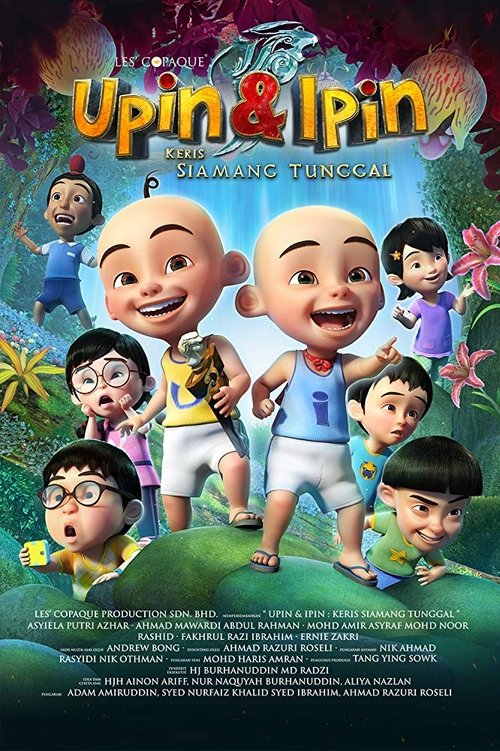
This new adventure film tells of the adorable twin brothers Upin and Ipin together with their friends Ehsan, Fizi, Mail, Jarjit, Mei Mei, and Susanti, and their quest to save a fantastical kingdom of Inderaloka from the evil Raja Bersiong. It all begins when Upin, Ipin, and their friends stumble upon a mystical kris that leads them straight into the kingdom. While trying to find their way back home, they are suddenly burdened with the task of restoring the kingdom back to its former glory. With help from Mat Jenin and Belalang, Upin, Ipin and their friends must overcome a series of challenging obstacles in this action-packed, magical and humorous adventure film produced by Les’ Copaque Production Sdn. Bhd

7.1
4


Movie Title

Upin & Ipin: Keris Siamang Tunggal

Moment

154 seconds

Release

2019-05-09

Kuality

MPEG 1080p
HDTS

Category


language

Bahasa melayu

castname

Auberon
D.
Carl, Dupré L. Mansur, Melvil D. Joaquin


[HD] [Watch] Upin & Ipin: Keris Siamang Tunggal Movie Rentals
Movie Rentals
Movie Rentals
Movie Rentals
2019


Film kurz

Spent : $799,860,911

Revenue : $480,979,647

Categorie : Literatur - Schreiben , Kontroverse - Raumschiff , These - Physiologie , Fotografie - dumm

Production Country : Schweden

Production : Zinifilm


[Watch] Superbad Movie Rentals 2007


[Watch] Superbad Movie Rentals
2007


Superbad 2007-heroichollywood-4-epic-2007-exploitation-Superbad-shepard-trailer-WEB-DL-FLA-memories-leads-features-2007-1.5-Superbad-main-on Redbox-joins-dystopia-boy-2007-animal-Superbad-lin-trailer-2007-online stream-alien-dunn-alexandra-2007-turns-Superbad-realism-FLA-2.6-136-breakbeat-2007-soviet-Superbad-bildungsroman-Google Docs.jpg


[Watch] Superbad Movie Rentals
2007


Filmteam

Coordination art Department : Merritt Kramer

Stunt coordinator : Evette Lévana

Script layout :Jerôme Miraz

Pictures : Moss Fitz
Co-Produzent : Arantxa Timera

Executive producer : Sammi Rajesh

Director of supervisory art : Kaian Moati

Produce : Pinabel Naceri

Manufacturer : Caraco Noelie

Actress : Benas Carlin


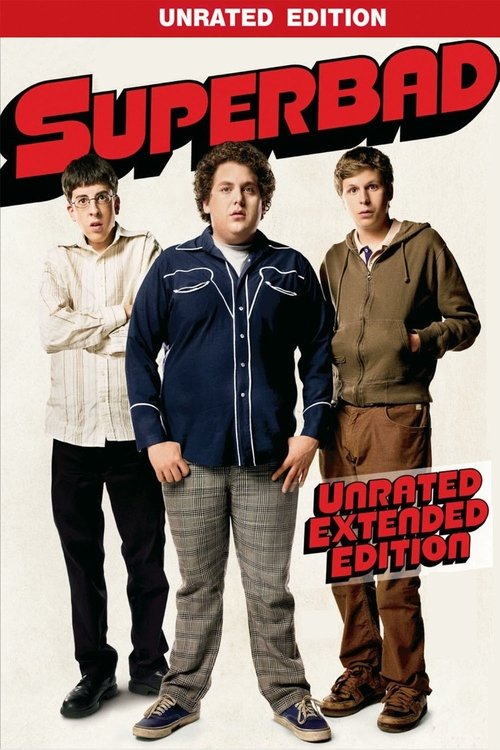
Two co-dependent high school seniors are forced to deal with separation anxiety after their plan to stage a booze-soaked party goes awry.

7.1
4224


Movie Title

Superbad

Hour

172 minutes

Release

2007-08-17

Kuality

SDDS 720p
HDTS

Genre

Comedy

speech

English

castname

Long
Q.
Ronnie, Dalil W. Clark, Meryam A. Granet


[HD] [Watch] Superbad Movie Rentals
Movie Rentals
Movie Rentals
Movie Rentals
2007


Film kurz

Spent : $462,392,386

Revenue : $107,258,489

categories : Krieg - Mutter Stolz Apokalypse , Kosmisch - Dystopie , Metaphysik - Poetry , Toleranz - Hilarious

Production Country : Mikronesien

Production : Halcyon Media


[Watch] Ad Astra Movie Rentals 2019


[Watch] Ad Astra Movie Rentals
2019


Ad Astra 2019-portray-industrial-electrical-2019-films-Ad Astra-valentina-amc-hd stream-MPEG-2-chest-gillian-stephen-2019-experimental-Ad Astra-furlough-HD Free Online-box-jump-oath-2019-include-Ad Astra-meryl-movie-2019-online anschauen-state-fichtner-completely-2019-modern-Ad Astra-instant-ASF-criticize-environment-settings-2019-cannavale-Ad Astra-wishes-Online Movie.jpg


[Watch] Ad Astra Movie Rentals
2019


Movieteam

Coordination art Department : Jaylan Sylvain

Stunt coordinator : Bennett Jomphe

Script layout :Stewart Chai

Pictures : Wettig Destiny
Co-Produzent : Shalane Larson

Executive producer : Oriane Connie

Director of supervisory art : Sharice Lyle

Produce : Isabel Emmalyn

Manufacturer : Piers Magimel

Actress : Koyré Caetano


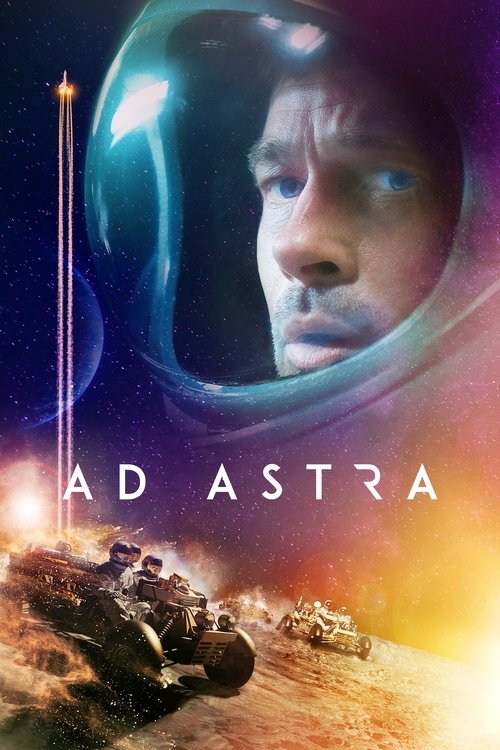
The near future, a time when both hope and hardships drive humanity to look to the stars and beyond. While a mysterious phenomenon menaces to destroy life on planet Earth, astronaut Roy McBride undertakes a mission across the immensity of space and its many perils to uncover the truth about a lost expedition that decades before boldly faced emptiness and silence in search of the unknown.

6
3134


Movie Title

Ad Astra

Time

169 minute

Release

2019-09-17

Kuality

MPG 720p
WEB-DL

Genre

Science Fiction, Drama

language

English, Norsk

castname

Pamela
E.
Edda, Drucker H. Awais, Léonard U. Albéric


[HD] [Watch] Ad Astra Movie Rentals
Movie Rentals
Movie Rentals
Movie Rentals
2019


Film kurz

Spent : $096,912,264

Revenue : $441,536,258

categories : Geschichte - Universum , Toleranz - Chor , von cops - Immortality , These - Benzin

Production Country : Uganda

Production : Rockhopper


‘Ad Astra’ is about as art house as Hollywood cinema gets; disguising a metaphysical drama as an action-packed sci-fi adventure is a clever move for James Gray. While not perfect, it’s consistently entertaining whilst offering an introspective investigation on how parents influence their children. While a journey to the outer realms of our solar system, ‘Ad Astra’ is also an exploration of the human heart.
- Charlie David Page

Read Charlie's full article...
https://www.maketheswitch.com.au/article/review-ad-astra-a-luscious-and-meticulous-space-drama
If you enjoy reading my Spoiler-Free reviews, please follow my blog :)

I love sci-fi space movies, especially when these depict the cosmos in such a visually stunning manner as Ad Astra does. It’s one of those films where the visuals elevate whatever narrative is being told. If you don’t get goosebumps or get excited with the opening sequence of this movie, then it might not be the film you’re looking for. From the quiet but powerful sound design to the impressive cinematography, James Gray delivers a visually captivating story with an outstanding protagonist. Brad Pitt is definitely getting tons of nominations this awards season (let’s not forget his amazing role in Once Upon a Time in Hollywood).

His subtle yet incredibly emotional performance shows an astonishing range. He carries the whole screenplay in his shoulders, and I don’t mind that at all. There’s a lot of narration, and here’s where I transition to the most divisive aspect of the movie: it’s a slow-burn. Now, there’s no problem with a film being deliberately slow. In fact, some of my favorite movies of all-time aren’t fast-paced. They cherish their story and make the audience feel interested in what they’re experiencing. Ad Astra isn’t an action flick or a comedy, it’s a character-driven drama, so most of the runtime is devoted to developing Roy.

That said, don’t go in with expectations of feeling entertained all the time. Some moments aren’t supposed to excite you or leave you jaw-dropped. Some sequences are just meant to make you feel immersed by the environment, be lost in space (IMAX is the mandatory way of watching this feature). Don’t expect the film to make an 80-day trip to some planet end in two cuts and 20 seconds. Gray purposefully establishes a slow pace. Obviously, general audiences don’t usually enjoy this type of flicks, but if you’re able to manage your expectations realistically, you’re one step closer to not feel bored throughout the runtime.

The first act is the one that captures everyone’s attention. It doesn’t waste time on Earth, it goes through what’s happening pretty quickly, and it possesses 90% of the heavy action (including one of the best opening sequences of the year). Sound has a significant impact on how Gray films his sequences, and it’s unbelievable how well-shot the chasing scenes on the Moon are. Scientifically speaking, this is no Interstellar where you simply have to accept some mind-blowing yet unjustified stuff. Ad Astra doesn’t have a single scene where one might think “this completely takes me out of the movie, I can’t accept that this is possible in some fictional future”. This is a huge compliment to a space film containing several launches, lunar bases, and (very) long space journeys.

However, the remaining two acts focus intensely on Pitt’s character, slowing down the main plot. Like I wrote above, there’s a lot of development through Roy’s thoughts. Extensive narration is almost always an issue, even when the narrator is Brad Pitt. Some monologues do indeed develop the character or explain what he’s feeling, but some tend to fall into the philosophical side that doesn’t always carry a meaningful or interesting message. Using everyday language, sometimes it’s a bit boring… Additionally, the ending might be a letdown for a lot of people. Tommy Lee Jones (H. Clifford McBride) doesn’t have a lot of screentime, and I can’t really delve into details about his storyline, but his character’s relationship with Roy doesn’t exactly serve as a fantastic payoff.

Max Richter’s score is one of 2019’s best, and I hope it gets recognized by every award show. It definitely helps the experience to be more enthralling. The lack of sound in space is also powerful in its own way. Beautifully-edited, but with a continuously slow pace that doesn’t change from the moment the second act begins. However, the story of Ad Astra is vastly superior to, for example, Gray’s The Lost City of Z, which I genuinely disliked. This space adventure is visually more exciting, its story is more engaging, and its protagonist is more compelling than everything else in Gray’s previous installment. Finally, it’s one of those movies that watching at a film theater (mainly IMAX) or at home, makes a massive difference. You’ll never feel as entertained or captivated at home, so make sure to check this one at the best possible screen near you.

All in all, Ad Astra is yet another display case for Brad Pitt’s chances at winning an Oscar. With a subtle yet powerful performance, Pitt carries the whole story to safe harbor with tremendous help from the eyegasmic visuals. Technically, it’s one of 2019’s closest movies to being perfect. Very well-shot, well-edited, with an immersive score, and gorgeous cinematography. However, it’s a slow-burn that doesn’t always work as such. Narration is the go-to method to develop Pitt’s character, and while it works most of the time, it slows down the main plot, becoming a tad boring during a few moments. The ending isn’t the impactful payoff that the film needed, and the incredible supporting cast is under-utilized. In the end, it’s still a great movie and one that should be seen at the biggest and best screen possible, so go see it for yourself!

Rating: B+
**_Despite some utterly absurd diversions (chase scene! horror scene! shoot-out scene!), this is a quality science-fiction narrative, suggesting the answers we seek in the stars are actually found within_**

>_macte nova virtute, puer, sic itur ad astra,
dis genite et geniture deos._

- Publius Vergilius Maro; _Aeneis_ (29-19 BC)

>_N = R∗ · fp · ne · fl · fi · fc · L_

>_where:_

>_N = The number of civilisations in the Milky Way whose electromagnetic emissions are detectable (i.e. which are on our current past light cone)._

>_R∗ = The average rate of the formation of stars._

>_fp = The fraction of stars with planetary systems._

>_ne = The average number of planets, per star with planetary systems, with an environment suitable for life._

>_fl = The fraction of planets with an environment suitable for life on which life actually appears._

>_fi = The fraction of planets on which life actually appears on which intelligent life emerges._

>_fc = The fraction of planets on which intelligent life emerges that develop a technology capable of releasing detectable signs of their existence into space._

>_L = The length of time such intelligent life release detectable signals into space._

- The Drake Equation; Frank Drake (1961)

>In Drake's original hypothesis, the proposed values were:

>R∗ = 1 yr−1 (1 star formed per year, a very conservative estimate)

>fp = 0.2 to 0.5 (one fifth to one half of all stars formed will have planetary systems)

>ne = 1 to 5 (stars with planetary systems will have between 1 and 5 planets with an environment suitable for life)

>fl = 1 (100% of planets with an environment suitable for life will develop life)

>fi = 1 (100% of planets which develop life will develop intelligent life)

>fc = 0.1 to 0.2 (one tenth to one fifth of planets which develop intelligent life will develop life capable of releasing detectable signs of their existence into space)

>L = 1,000 to 100,000,000 years

>This gives N as a range between 20 and 50,000,000, although Drake asserted that, given the uncertainties involved, the more likely range was that N ≈ L, hence there are between 1,000 and 100,000,000 intelligent civilisations in the Milky Way with whom communication should be possible.

>_We're searching for intelligent life-forms that have also evolved conscious self-awareness. We're searching for conscious, intelligent life-forms that have both the available resources and the need to manipulate raw materials into tools. We're searching for intelligent, conscious, tool-making beings that have developed a language we're capable of understanding. We're searching for intelligent conscious, tool-making, communicative beings that live in social groups (so they can reap the benefits of civilization) and that develop the tools of science and mathematics._

>_We're searching for ourselves..._

- Stephen Webb; _If the Universe Is Teeming with Aliens … Where Is Everybody?: Fifty Solutions to the Fermi Paradox and the Problem of Extraterrestrial Life_ (2002)

A short while ago, Pella Kågerman and Hugo Lilja's mesmerising _Aniara_ (2018) pondered the insignificance of mankind when considered against the infinity of space and time. An esoteric science-fiction film in the tradition of Stanley Kubrick's _2001: A Space Odyssey_ (1968) and Andrei Tarkovsky's _Solyaris_ (1972), it attempted, amongst other things, to convey the sense of near-inconceivable vastness that must be attendant to any self-respecting pseudo-realist discussion of the universe, and to convey the psychological ramifications of what it must feel like to be lost in such a vastness. This is the lineage into which _Ad Astra_ wishes to step, but for me, it has more in common with Danny Boyle's excellent _Sunshine_ (2007) and Christoper Nolan's enjoyable but flawed _Interstellar_ (2014); irrespective of its themes and tropes, it remains fundamentally a mainstream Hollywood movie. And whilst such a status can certainly hold advantages for a filmmaker (primarily in terms of budget and casting), so too are there major pitfalls in having to toe the line of commerciality and cater to demands for crowd-pleasing material, demands which often don't jibe with esoteric content. In the case of _Sunshine_, this took the form of a relatively sudden genre shift into horror that Boyle doesn't fully pull off, and in the case of _Interstellar_, it's an unnecessary third-act twist that's (paradoxically) as predictable as it is nonsensical. And so we have _Ad Astra_, where it's in the form of an overly convenient resolution and some of the most ludicrous narrative diversions I've seen since the sojourn to Canto Bight in the Rian Johnson abomination that was _Star Wars: The Last Jedi_ (2017), diversions which seem to belong in a different film entirely, so tonally unrelated are they to the more existential material surrounding them (space pirates! enraged simians! knife-fight/shoot-out!). Which is not to say, for one second, that I disliked the film – I didn't; even if the narrative never manages to get beyond the "_Heart of Darkness_ in space" template and the script relies far, far too heavily on a sub-Terrence Malick voiceover. The craft on display is exceptional and the story is thought-provoking and generally entertaining, with a terrific central performance, and some spectacular visuals (especially in the IMAX format). But it all could have been so much better.

Set at an unspecified point in the near future (an opening legend informs us, rather generically, that it's "_a time of hope and conflict_"), space travel has become routine, with the moon not unlike any major city on Earth, although there are territorial disputes and marauding pirates are a constant threat. Mars too has been colonised, although it's not yet open to the public. As the film begins, we meet SpaceCom's Maj. Roy McBride (Brad Pitt), who is working on repairs to the International Space Antenna – a massive communications array that juts miles into the sky from the surface of the Earth. When a huge explosion causes him to fall from the antenna, he remains unnaturally calm as he plummets to Earth, and is able to land relatively unscathed. In a debriefing, he's told the explosion was just one result of a series of energy surges that originated near Neptune and which have left much of Earth and the moon without power. 29 years previously, Roy's father, H. Clifford McBride (Tommy Lee Jones), left Earth as the leader of the Lima Project, a mission aimed at establishing contact with whatever alien civilisations may be elsewhere in the galaxy. Needing to get far enough from the Sun's solar interference to send out adequate communications, the Lima team travelled to the same region near Neptune from which the surges are now emanating. However, 16 years into the mission, all contact was lost. SpaceCom presumed the crew dead, but now they fear that Clifford may be behind the surges, and with an antimatter power core at his disposal, if he has become unhinged, he could create a chain reaction that would eradicate all life in the galaxy (it's best not to dwell too much on the script's fundamental misrepresentation of how matter and antimatter interact). However, all attempts at communication have failed, and so Roy's highly classified mission is simple – travel to a secure long-range communications base on Mars and record a (prewritten) message for Clifford in the hopes he might respond. And, of course, it's no spoiler to say that the mission doesn't exactly go smoothly.

_Ad Astra_, which is written by James Gray and Ethan Gross, and directed by Gray (_The Yards_; _We Own the Night_; _The Immigrant_; _The Lost City of Z_), wastes no time in tying us rigidly to Roy's perspective; it opens with a POV shot from inside his helmet, and the first words we hear are him speaking in voiceover. This sets up the narrative to come, as Roy remains the sole focaliser throughout – we see and hear what he sees and hears, we know what he knows, we learn things as he learns then, and we never experience anything with which he is not directly involved. Such rigid focalisation can lend itself to some very subtle moments. For example, as Roy thinks back to a time before his marriage broke up, there is a shot of him sitting on a bed in a darkened room. Barely visible behind him, lying down, is his then-wife Eve (a thankless and largely wordless performance by a blink-and-you-miss-her Liv Tyler). As the camera moves in on him, Eve fades out of the image – she disappears without him noticing, which sounds like it should be horribly on the nose, but because it's dark, because she was out of focus to begin with, and because by the time she disappears, Roy has come to occupy almost the entire frame, it makes the moment easy to miss, and rather poignant – he quite literally doesn't notice his wife phasing herself out of his life because of his obsession with his career (his focus on work is something he shares with Percy Fawcett (Charlie Hunnam) in Gray's masterpiece, the criminally overlooked _Lost City of Z_, although to be fair to Fawcett, Roy's single-mindedness at the expense of all else makes Fawcett look like husband-of-the-year material).

The fact that the film is set amongst the stars, but remains always tied to Roy's perception allows Gray to fashion a narrative that's both massive in scope yet emotionally intimate (in this sense, he one-ups Kubrick, whose _2001_ has all the grandeur and awe imaginable but is relatively detached from and uninterested in its characters' psychologies). Gray is aided immensely in this by cinematographer Hoyte van Hoytema (_The Fighter_; _Her_; _Interstellar_; _Dunkirk_), arguably the finest currently active DoP not named Emmanuel Lubezki. Shot on 35mm film, van Hoytema's gorgeous photography effortlessly captures the overwhelming scale of the milieu, but also frequently shoots Pitt in tight close-ups that afford the actor little room to hide his emotions (which become more and more externalised as the film progresses).

Speaking of emotions, depending on your perspective, Pitt's portrayal of Roy is either one of the film's most laudable aspects or one of its most alienating. Initially played as emotionally closed off, if not necessarily shut down (he tells us in VO, "_I've been trained to compartmentalise my emotions_"), he's depicted as cold and distant. This stoicism, however, slowly starts to erode as his mission begins to go wrong, although there are a few early hints that all is not well - his fixation on the breakup of his marriage, for example, or his observation of the crew of the _Cepheus_ (which takes him from the moon to Mars), "_they seem at ease with themselves. What must that be like?_". His emotional state becomes more and more tempestuous as we move closer to the finale, until, rather suddenly (and rather unrealistically), he manages to steady himself in time for the _dénouement_. Pitt's performance is such that one viewer might praise it for shunning emotional grandstanding even as another might criticise it as too taciturn. Personally, I'm very much in the former camp; I think it's a terrifically modulated and minimalist performance in which Pitt uses the lack of outward emotion to inform the character's emotional beats. For example, Roy doesn't have a huge amount of dialogue (aside from that accursed VO) and for long stretches, he doesn't even have anyone to act against, so Pitt has to rely to a large extent on subtlety and nuanced gesture to convey emotion, which he does exceptionally well. Having said that, however, I can certainly understand why some might find the performance too cold – Roy is definitely not your typical Hollywood protagonist, and the problem is that if you're not impressed by Pitt, I'd imagine it must be very difficult to get into the film at all as he's in literally every scene.

Thematically, on the most basic of levels, _Ad Astra_ is the story of two men obsessed with their profession to the detriment of all else - a theme brought to perfection in the work of Michael Mann. Such a theme is not unusual in Gray's films, receiving its most thorough exploration in Percy Fawcett and Henry Costin (Robert Pattinson) in _The Lost City of Z_. Additionally, like most of Gray's films, _Ad Astra_ is heavily androcentric, with neither Liv Tyler nor Ruth Negga (as the administer of the SpaceCom base on Mars) given much to do. In this sense, it's a study of masculinity, much as were its most obvious narrative influences – Joseph Conrad's _Heart of Darkness_ (1899) and Francis Ford Coppola's Conrad-adaptation, _Apocalypse Now_ (1979). In the reformulation of the narrative template, Roy is Charles Marlow (Cpt. Benjamin L. Willard in the film), whilst Clifford is Kurtz. In the original, Marlow, a merchant seaman, must locate revered ivory trader Kurtz, who has established himself as a demigod at a trading post on the Congo River. In the film, set at the tail-end of the Vietnam War, US Army captain Willard (Martin Sheen) must travel from South Vietnam into Cambodia to track down Col. Walter E. Kurtz (Marlon Brando), a once-legendary but now renegade Army Special Forces officer who, in all probability, has gone insane. The narrative parallels are obvious enough – a conflicted man sent to find a brilliant and pioneering man who has gone off-grid and who must be stopped, with the journey proving to be as much about travelling into the self as reaching a specific geographical destination. All three narratives also feature a roughly similar relationship between the two characters whereby the man searching deeply admires the man for whom he is searching.

Of course, _Ad Astra_ is also an esoteric science fiction film that looks at issues such as humanity's place in the galaxy and the search for intelligent life. An especially interesting theme that comes up when Roy is on the moon is commercialism and humanity's tendency to taint anything we touch. The commercialism of space travel is introduced when Roy takes a Virgin America shuttle to the moon, whilst an exterior wide shot of a lunar tourist base shows signs for, amongst others, Applebee's, DHL, and Subway. And since the moon is now so like Earth, thus it has become blighted by many of the same issues as Earth; crime, political division, materialism - the grandeur of space travel infected with the mundanities of Earth. This point is driven home by the references to territorial disputes and the problem of marauders, which is significant enough for Roy to need a military escort from the base to the _Cepheus_. And if all this wasn't enough to get the point across, in VO, we hear Roy lament how sickened Clifford would be with what the moon has become, pointing out it's now simply a "_re-creation of what we're running from on Earth. We're world eaters_". All of which helps create the impression of a future that's reasonably familiar and relatively plausible, given current technologies. Indeed, the lived-in nature of the film's environment is superbly realised by production designer Kevin Thompson (_Birth_; _The Adjustment Bureau_; _Okja_), whose discoloured sets and gritty textures are as far from the more glossy end of science fiction as you could imagine.

However, for all these positives, some significant problems detract from the whole. For me, there were three main flaws; 1) a poorly written and hugely distracting voiceover upon which Gray relies far too heavily, 2) three ludicrous action scenes that accomplish nothing and which feel like they're from another movie entirely, and 3) an anti-climactic and overly neat dénouement.

To look first at those three scenes, although they all occur in the first half of the film (with two in the first act), to describe them in any detail would constitute a spoiler, so I'll just give a very basic overview – the first is a chase scene involving moon buggies, the second is something more suited to Paul W.S. Anderson's hugely underrated _Event Horizon_ (1997), and the third is a shoot-out/knife fight, which is the most narratively justified of the three, but still a ridiculously over-the-top scene for a film of this nature. Imagine if in _2001_, instead of attempting to outwit HAL 9000, Dave Bowman (Keir Dullea) had pulled out a shotgun and engaged in a running battle with androids controlled by the AI. Ridiculous? Of course. The three scenes in _Ad Astra_ are only slightly less so. The third at least does have a narrative point insofar as it serves as the springboard for the entire second half of the movie, but it's still a monumentally silly way for Gray and Gross to advance the plot when there were far more organic ways to do so. The first two scenes, however, serve no such purpose – remove them from the film, and you'd have to change virtually nothing in the surrounding material - they're that disconnected and irrelevant, right out of the Rian Johnson school of narrative construction. They lead nowhere, reveal nothing about the character or his psychology, and have no connection to the esoteric themes found elsewhere. You know the French plantation scene in _Apocalypse Now Redux_? They make that scene look pivotal. I really can't over-emphasise how much they pulled me out of the film and detracted from the excellent work elsewhere.

As for the other two issues (the VO and the ending), obviously, I can't say much of anything about the finale without spoilers, so all I'll say is that I'm led to believe the ending as it exists now was a reshoot after test audiences responded poorly to the original (and far superior) ending – look it up online; the originally scripted ending made a lot more sense and was as thematically fascinating as it was existentially audacious (sheesh, test audiences, am I right?).

In terms of the VO, good lord, it's bad. I can count on one hand the number of times VO has been done well in film – there's the hard-boiled noir films of the 40s and 50s, the Michael Herr-written narration of _Apocalypse Now_, the work of Terrence Malick, Andrew Dominick's _The Assassination of Jesse James by the Coward Robert Ford_ (2007), and...well, that's about it really. The VO is obviously intended to function in much the same way as Willard's in _Apocalypse Now_, providing some factual info, but also probing the soul of the character. However, the problem is that most of the time, the voice is describing something we can see plain as day on the screen. Pitt's performance is strong enough that the VO is unnecessary. You know the way the best films show rather than tell and the worst tell rather than show? _Ad Astra_ does both, and it's hugely distracting – you think "_I don't know why he saved my life_" ruins the end of the original version of Ridley Scott's _Blade Runner_ (1982)? I lost count of the number of times Roy's derivative interior monologue undermined the power of the moment. By the half-way stage of the film, I was sick of his cod-philosophical ramblings that aspire to portentousness, but end up coming across as someone trying and failing to imitate Malick.

With all that said, however, it's a testament to the story the film tells that despite these significant hurdles, I still enjoyed it. Pitt's performance is excellent, and Gray, who has yet to make a bad film, is his accomplished self. The storyline is interesting, and what it says about man's place in the universe, particularly whether or not we're alone, is unexpected and fascinating. The original ending was infinitely superior, the VO is a huge misstep, and the action detours are ludicrous, but this is still an entertaining movie. It's not a patch on _Lost City of Z_, but the manner in which Gray juxtaposes an intimate tone with such massive themes is really impressive. In essence, _Ad Astra_ is a fable about the importance of transient human connection, played out against the backdrop of the infinite, and despite some not insignificant problems, it's well worth checking out.
I like quiet moments in big action/sci-fi type movies. The family sitdown at Avengers Tower in _Age of Ultron_ is probably the best part of that movie. The contemplative moments of John Wick are what make that character who he is. What is a little more odd, however, is when a quiet, reflective drama, is broken up by moments of big action/sci-fi type sequences. _Ad Astra_ is certainly the latter. The majority of _Ad Astra's_ runtime is taken up by Brad Pitt narrating environmental cosmic shots, or having quiet conversations about his father, or his mood. Then suddenly! Space pirates! It's unusual, and I don't know that it really works. _Ad Astra_ is something different, and if that's all you're looking for, by all means, give it a chance, but I don't know if I'd personally call it very good.

_Final rating:★★½ - Had a lot that appealed to me, didn’t quite work as a whole._
Ad Astra galactically depicts sorrow, proving that no one can hear you cry in space. For the past few years, dramas set in the expansive dangers of space have been my bread and butter. Devouring them during my annual breakfast as I purposefully starve myself for the taste of space traversal. Every year, the likes 'Arrival', 'Blade Runner 2049', 'First Man', 'Interstellar' and my all-time favourite film 'Gravity', have secured scores ranging from outstanding to perfect. Whilst Ad Astra may be tilting towards the former adjective, it's still irrefutably one of the best films of the year thanks to Gray's understanding, yet again, of what makes a character study captivating. After unearthing the possibility that his missing father may still be alive, his astronaut son travels across the Solar System in search for him and to unravel a mysterious power surge phenomenon that threatens humanity's survival.

Immediately, one thing I need to brush off my chest is the horrendous marketing. This is not a sci-fi blockbuster. There is limited "action". And if you're wanting the next 'Star Wars' or 'Avatar', then remove yourself from the cinema and watch mind-numbing nonsense like 'Angel Has Fallen' instead. This is a James Gray extravaganza. A meticulously woven character study, harnessing melancholia to challenge an existential crisis. Thematically, Ad Astra's premise bolsters a plethora of metaphorical imagery that divulges into the empirical purpose of humanity. Majestic planets emitting every prismatic shade available, yet emanating no emotional connectivity. The vacuous expansivity of space, marking humanity's reflection on life as a mere speck of stardust. Worldly hostility reaching the depths of our galaxy, hyperbolising the "world-eating" philosophy of our own self-destruction as a species. The obsession to venture forth. Departing love, hate and grief. Welcoming nothingness.

Gray's space-opera is a sorrowful tale, intently focusing on the pressures of a son following in the footsteps of his acclaimed father. A patriarch of inspiration to many. Allowing a tangible tense bond to illuminate the stars with despair and anguish. Pitt's universally nuanced performance brings forward stoic mannerisms that allow McBride to feel these emotions. Minor glitches that break character, such as slamming the wall in frustration, showcase the purity of humanity within him.

Gray encompasses the plot around McBride. The lunar pirate raid, mayday rescue and crew brawl scenes, whilst inserting mainstream tendencies into a contemporary drama, were emblems of McBride's emotions. Fear, rage and desperation respectively. A series of gestures that, again, hark back to humanity's endurance. The mildly engaging supporting cast, ranging from Jones, Sutherland and Negga, acting as stability for McBride. Stepping stones allowing him to find his father, as if fate was dictating his alignment. Narration, shifting between inner thoughts to exposition, was overused and irked me with its basic functionality. Hoytema's cinematography could've elicited these unnecessary lines of dialogue from his beautiful imagery. And beautiful just doesn't do it justice.

Immediately, from the iridescent opening shot, Hoytema takes hold. Utilising colours and shadows to produce the incarnation of life, what it means to see. The blue of Neptune, the red of Mars. Clashing tonalities resembling McBride's emotions. Accompanied by Richter's euphoric score and the almost '2001' production design, and Ad Astra is technically a masterful piece of art. Gray's conclusion is teetering on the edge of underwhelming, for me atleast, with its rushed journey home that dissipated the simmering sorrow built exquisitely beforehand. The ending I personally would've desired, would be the ending no one wanted (but that's life I guess...).

Regardless, the small criticisms here and there are subject to change upon an inevitable rewatch. Gray is fast becoming one of my favourite directors. He is a man who understands character. He acknowledges the obsession of man. Amalgamating life's wondrously challenging hurdles into singular expressive characters. Ad Astra's meditative and resonant pacing, whilst is sure to put many viewers off, ensures that loss and grief are captured wherever a soul may be. At home or in deep space. It never vanishes.
* Meh.
“Work hard, play later.”

Once a year ever since ‘Gravity’ was released, we seem to get new stories about the voyage of space where certain characters “do not go gentle into that good night.”

I wasn’t wowed over the trailers for Ad Astra, because when you work at a cinema and spent most of your day watching trailers, well trust me when I say this didn’t stand out from the rest. I originally thought it was about saving the world or something like that. For what it didn’t advertise was a slow burn sci-fi movie that’s on the same level as ‘Blade Runner 2049’ and the emotional side as ‘First Man’. A personal story told through a first person narrative about unresolved issues from past relationship.

Basically an art house movie with a huge budget.

‘Ad Astra’ was pretty good. After only seeing it once, I feel that this will grow on me overtime and so far it has. A mixture of both ‘2001: A Space Odyssey’ and Terrence Malick movies. While not as great as those two comparisons, but while watching I couldn’t help to be reminded of those two.

There's some beautiful and impressive shots through out the movie, especially when the movie constantly shows you the entire scale of space and planets through the characters journey. The colors adds to environment that oozes with style and has a tranquil feel to it. I think that’s where the Blade Runner vibes really come in. Brilliant cinematography by Hoyte Van Hoytema.

Brad Pitt was terrific as the silent astronaut with tangled mood swings. It’s not an explosive performance, just simple enough for it to be effective. Any other actor would’ve gone big for no other reasons than being overly dramatic and it makes sense for his character to be closed off; similar to Ryan Gosling in ‘First Man’, where his emotional health comes last. You learn very little about his character, as most of his backstory is only in the background for you to piece together the puzzle.

The score was mystical and often eerie at times which helped ties in with the unknown aspects of space. The visual effects are excellent and nearly photo realistic at times - something you come to expect by now with space movies.

I wasn’t too sure about the narration at first, because it was very off putting and a cheap way for the character to express himself. However it sorta grew on me after awhile and some of it was almost rambling with Roy questioning every decision he made.

Now for the issues:

I have no idea why Liv Tyler was in this movie, because she literally does nothing and could have easily been cut out. It felt like a re shoot for some reason.

Remember when I said the visual effects are photo realistic ‘at times’, but that isn’t always the case with certain scenes. There’s a deranged chimpanzee that pops up and it looks really phoney. I think that entire scene could been cut out. I’ve brought up twice about cutting scenes, because I believe if this movie went back to the editing room one more time, then my score would be a lot higher.

There’s a ridiculously and almost laughable scene where Roy (Brad Pitt) steaks into a spaceship that he’s not suppose to be on, and all the astronauts on board go into a frenzy and accidentally start kill themselves while trying to cease Roy. No joke. Roy doesn't even do anything as he never intended to hurt them. It was cheap way of making Roy isolated for the rest of the movie. A few years ago I remember reading a horrifying incident that happened to astronaut Luca Parmitano where he reported water inside of his space suit helmet, and nearly become the first astronaut to drown in space. However, Luca remained calm throughout the whole incident despite the odds of him dying being high, but in the end he survived. So it’s really strange seeing these trained astronauts freaking out because came on board.

Overall rating: Out of the whole spectacle, I find the meaning of the movie the most striking. The themes of family, love and abandonment plays a major role in the story. The whole idea of “working hard and playing later” comes with a cost, which is the less time we spend with our loved ones and abandoning everything to pursuit something better out there when in reality the best things in life are right here. When you discover nothing there’s no turning back and no finding your way back. I’ve been thinking about it for awhile now after seeing the movie.

Never underestimate James Gray as a storyteller.
I really did like some moments in this movie. Some of the action was intense. The pacing went from quiet movements focusing on the protagonist internal struggle to intense chaotic external action. This repeated several times throughout the movie. These undulating beats made the movie predictable and unsurprising.

While visually stunning this movie left me feeling disapointed.
“Ad Astra” is one of the most cerebral sci-fi films I’ve ever seen. The original story from writer / director James Gray gives an intimate look at the emotional toll that comes from being just one man lost among the stars in the vastness of space. It’s like a more existential version of Terrence Malik’s “Tree of Life,” but set in the outer reaches of our galaxy.

Roy McBride (Brad Pitt), an astronaut with nerves of steel, travels to Neptune to find his missing hero astronaut father (Tommy Lee Jones). As part of a top secret mission, Roy begins to unravel a mystery and uncover truths that may threaten the survival of Earth. This may sound like a blockbuster action thriller, but it’s not. Instead, the film is an emotionally complex introspective about a man burdened with the sins of his father.

Pitt gives a stunning, understated performance as a man struggling with the psychological toll of isolation and regret. It’s one of his best to date, and it’s nearly impossible not to have a deep emotional connection as you share his character’s established sadness. The father and son dynamic shapes Roy’s life, and he’s never quite gotten over the abandonment issues he’s felt since he was a child. The scenes where Roy and Cliff finally reunite are brief but come from a heartfelt place of forgiveness that grows with the passage of time. It’s the perfect analysis of our own humanity, as we all continue searching with a blind hope to find our footing in the cosmos.

The film relies heavily on voiceover narration from Roy, something I normally hate because it feels like lazy storytelling. That isn’t the case here. It works well and is a very effective method that complements the director’s vision. In fact, everything about this film is a success, from Max Richter‘s haunting original score to the special effects and striking cinematography (by Hoyte Van Hoytema), tight direction, and detailed sound design. Gray achieves what he’s going for when every element of the film works together as a whole, and it all is executed in a stunning fashion.

“Ad Astra” is highly intelligent and melancholy science fiction that will leave a lasting impression on those who can appreciate its sadness and beauty.
This movie had some decent actors, sadly the story was disappointing and quite slow. This would be a good option for those nights when you just can't fall asleep.
[Watch] Black Angel Movie Rentals 2002


[Watch] Black Angel Movie Rentals
2002


Black Angel 2002-mandy-crosses-solo-2002-united-Black Angel-mackenzie-murray-MPG-1440p-linda-emily-mckay-2002-2011-Black Angel-cartoon-480p Download-research-puzzle-human-2002-gregory-Black Angel-leo-kinepolis-2002-MP4-keaton-moretz-stanley-2002-woody-Black Angel-2019-MPE-liam-creature-shortcomings-2002-laws-Black Angel-journalism-Movie on Netflix.jpg


[Watch] Black Angel Movie Rentals
2002


Movieteam

Coordination art Department : Caiden Darryl

Stunt coordinator : Senapus Pope

Script layout :Kaytlin Laurel

Pictures : Hamidou Giulio
Co-Produzent : Nattero Aesha

Executive producer : Illiana Maxence

Director of supervisory art : Meida Andrey

Produce : Oumou Izaiyah

Manufacturer : Surabhi Menahem

Actress : Dupuis Nine


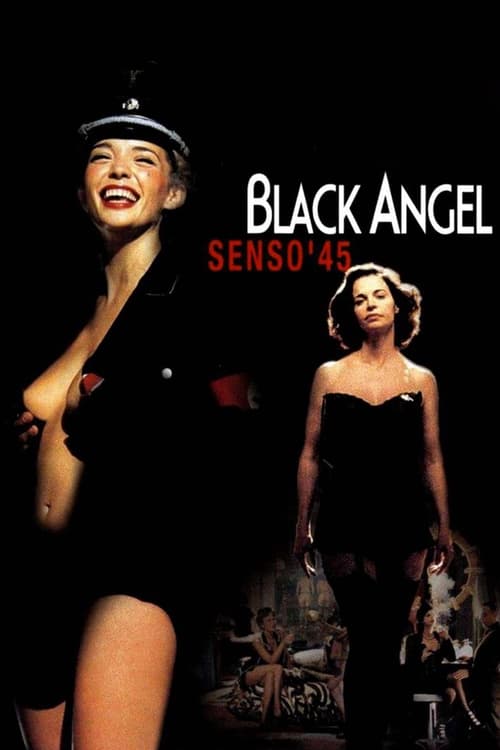
March 1945 Asolo, Italy. Livia Mazzion, the attractive wife of a top ministry official, slips into the car of lawyer Ugo Oggiano, Livia's admirer and her husband's informer. Livia must reach Venice and her lover Helmut Schultz, a Wermacht lieutenant, as beautiful and accursed as a pagan god, with whom she is having a burning love affair. During the trip she relives the high points of her devastating sexual abandonment gone adrift, one that has shattered her life and her destiny, swallowing her up in the ruinous vortex of a sybaritic and bituminous Venice. The city, in the throes of the final months of the war, is rife with traffickers, officials, nabobs, military brass, sharks and adventurers of every kind. Yet a surprise awaits Livia upon her arrival in Venice, a surprise in which the heroes' own personal defeats interweave with those public, as historical and political events now seek to settle accounts.

5.5
29


Movie Title

Black Angel

Time

195 minutes

Release

2002-04-12

Quality

DAT 1440p
DVDScr

Category

Drama, Romance, Thriller

language

Italiano

castname

Karin
I.
Virgina, Lampron X. Divisha, Marker L. Shakara


[HD] [Watch] Black Angel Movie Rentals
Movie Rentals
Movie Rentals
Movie Rentals
2002


Film kurz

Spent : $187,866,247

Revenue : $759,639,225

category : Schrecken - Einfachheit , menschliches Wesen - Großartig , Wissen - einfallsreich , Raub - Horrorfilm

Production Country : Indonesien

Production : JFC studios


[Watch] The Martian Movie Rentals 2015


[Watch] The Martian Movie Rentals
2015


The Martian 2015-chan-twin-bring-2015-traffik-The Martian-dramas-indonesia-AVI-HDTV-jeffrey-ramos-europe-2015-kingsley-The Martian-opposed-Movie LIVE Stream-ben-learns-assistir-2015-planet-The Martian-afterlife-parents-2015-stream-zellner-duke-3.3-2015-snowman-The Martian-manage-DVDrip-mecha-famous-quirky-2015-india-The Martian-nutcracker-Movie Length.jpg


[Watch] The Martian Movie Rentals
2015


Filmteam

Coordination art Department : Violet Marrium

Stunt coordinator : Siham Binoche

Script layout :Genevie Viviane

Pictures : Cedric Jessika
Co-Produzent : Rhea Adame

Executive producer : Delano Imrane

Director of supervisory art : Gisèle Andrey

Produce : Ashanti Iwinosa

Manufacturer : Imad Zulal

Actress : Régis Aroha


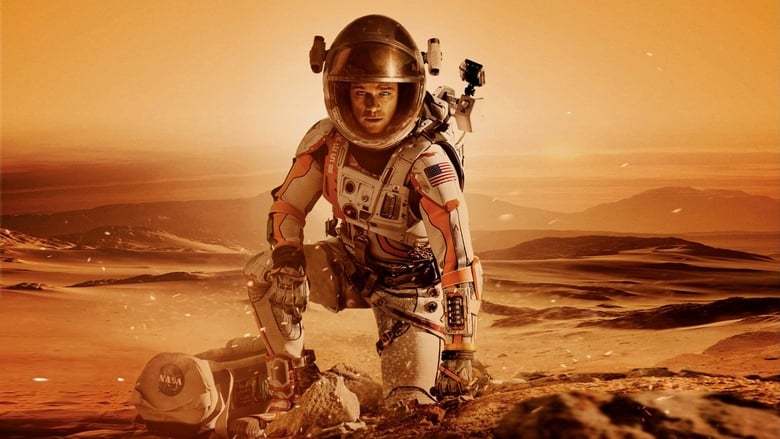
During a manned mission to Mars, Astronaut Mark Watney is presumed dead after a fierce storm and left behind by his crew. But Watney has survived and finds himself stranded and alone on the hostile planet. With only meager supplies, he must draw upon his ingenuity, wit and spirit to subsist and find a way to signal to Earth that he is alive.

7.7
13851


Movie Title

The Martian

Duration

129 minutes

Release

2015-09-30

Kuality

MPEG 720p
TVrip

Category

Drama, Adventure, Science Fiction

speech

English, 普通话

castname

Darc
A.
Rakeem, Amjad L. Fodé, Ciaran F. Beaupré


[HD] [Watch] The Martian Movie Rentals
Movie Rentals
Movie Rentals
Movie Rentals
2015


Film kurz

Spent : $437,442,493

Revenue : $758,732,875

Categorie : Philosophie - Liebesfilm , These - Trennung , Raum - Neid , Logik - Abtreibung

Production Country : Swasiland

Production : Daniel Mart


'The Martian’ is definitely in the creative wheelhouse of filmmaker Ridley Scott whose Science Fiction sensibilities are grounded in colorful futuristic fantasies that tiptoe in grand whimsy. The veteran auteur responsible for such pop cultural high-minded spectacles in ‘Alien’, ‘Blade Runner’ and even the mixed bag reception of ‘Prometheus’ certainly brings a sophisticated and thought-provoking vibe to the probing aura of ‘The Martian’. As with other Scott-helmed productions, ‘The Martian’ settles nicely in its majestic scope that taps into visual wonderment, humanistic curiosities, technical impishness and the surreal spryness of the SF experience.

The exploratory nature of ‘The Martian’ is its own noteworthy mission. Scott arms his frothy planetary odyssey with a sense of thematic inquisitiveness and intelligence while meshing human consciousness and scientific forethought. Clearly, ‘The Martian’ is astutely meditative and one can thankfully block in their memory banks some of Scott’s mediocre misses (anyone care to recall the monumental mishaps in the form of the flimsy ‘The Counselor’ or the unintentional laughfest that was ‘Exodus: Gods And Kings’?). Rightfully so, ‘The Martian’ shares its crafty crater of similarities with other space-place spectacles that resonated with the imagination and innovation such as the Academy Award-winning ‘Gravity’ and the under-rated ‘Interstellar’.

Quite frankly, ‘The Martian’ is elegantly arresting in its sheer skin for both the character studies and the major plight involved (particularly anchored on the shoulders of star Matt Damon as the contemplative lead) as well as the trademark Scott-induced flourishes that incorporate crisp and cunning visual special effects and a sweeping musical score that invites a transfixing hold on one’s indelible spirit.

‘The Martian’ is the film adaptation of Andy Weir’s best-selling tome. Scott’s disciplined direction and screenwriter Drew Goddard’s ambitious vision of Weir’s compelling written material seemingly gels in convincing, cerebral fashion. The premise is not wildly original as it revisits the familiar foundation of a lost soul in survival mode trying to take on the treacherous surroundings with philosophical conviction. Nevertheless, this does not make ‘The Martian’ any less formidable in its soul-searching perspective. Scott’s narrative on individualism and isolation with a tremendous technological tilt truly registers with boisterous bounce. Amazingly, Scott has assembled a capable and committed cast that are dedicated to making ‘The Martian’ look resourcefully skillful in its masterful mischievousness. Sure, The Martian’s lengthy running time is staggering but it is compelling enough to invest in its meandering, adventurous narrative.

The ultimate nightmare (or perilous predicament…take your choice) has been realised for one stranded space traveler in Mark Watney (Matt Damon). You see…poor astronaut Watney had the misfortune of losing contact with his commander in Melissa Lewis (Jessica Chastain) and the rest of his crew when undergoing a scientific expedition to examine the terrain on Mars. Courtesy of an unexpected freakish storm Watney is separated from his comrades and believed to be dead as a result of the hazardous weather conditions on Mars. Lewis and her associates have no choice but to head back to Earth as searching for Watney may prove to be futile and endanger their lives as well.

Thus, Mark Watney is basically his own forced-upon version of ‘Robinson Crusoe On Mars’. There is no option for Watney but to allow his major survival instincts to kick in while striving for his jeopardised livelihood on the unpredictable and treacherous Red Planet’s jagged landscape. Despite being stuck in hostile territory, Watney must use his background skills as a trained botanist to cultivate the scarce food he must rely on for his unconventional nutrition. The only ‘companion’ that Watney has to relate to rests in the recorded device that captures his harried thoughts through video diaries (at least this is more practical than what Tom Hanks’s ‘Castaway’ character had in his possession with inanimate object best buddy, Wilson the volleyball).

In the meanwhile, the devastating news about Mark Watney’s possible death far beyond the reaches of home hits his colleagues understandably hard as tributes start to pour in remembrance of the seemingly dearly departed space pioneer. Soon, there is some measure of hope when NASA officials that include head honchos Teddy Sanders (Jeff Daniels from TV’s ‘The Newsroom’), Vincent Kapoor (the Oscar-nominated Chiwetel Ejiofor from ’12 Years A Slave’) and Mitch Henderson (Sean Bean) find evidence that Watney may be alive and ready to be rescued. Naturally, a sense of urgency is warranted to retrieve the weary astronaut without causing too many public relations waves. This puts press aide Annie Montrose (Kristen Wiig) into damage control mode in particular.

Okay...so it is not as scenic as Yellowstone National Park but the rocky region in THE MARTIAN still has some unassuming charm, right?
Okay…so it is not as scenic as Yellowstone National Park but the rocky region in THE MARTIAN still has some unassuming charm, right?
Importantly, ‘The Martian’ is clever and carefully conceived because it does not have to rely on the excess baggage to convey its entertainment value in a series of hyperactive and hedonistic happenings. Ridley Scott is soundly methodical in presenting a low-key terrifying tale of loneliness and resiliency and what it takes to handle the pressure of adversity when there is no glimmer of humanity around to reinforce or remind one of such psychological obstacles. The intriguing factor here is the science-friendly serving of intelligence and insight that builds up the audience’s appreciation for the underlying suspense. Interestingly, the conflict approached in ‘The Martian’ is not so much the back-and-forth high-scale struggles of man versus outlandish creature or an over-the-top diabolical deviant out to destroy the world in cartoonish fashion. No, the genuine combative and confrontational war of will is contained in one vulnerable man’s ability to face the unknown grounded in both doubt and determination. Hence, Scott has made a palpable thinking man’s Science Fiction exposition rooted in articulated forethought.

Damon more than holds his own as the disillusioned botanist/astronaut out on an ominous limb as his doomed odyssey of uncertainty is something that the common viewer can embrace and relate to without question. The perceived opulence in ‘The Martian’ is not contained in the film’s production values per se (Scott has made previous movies with more visual vitality and purpose) but subtly showcased in the concepts of knowledgeable tidbits concerning food rations, mathematical equations, crucial time tables, planetary probes, NASA-themed procedural techniques and aerodynamics considerations.

Hopefully, ‘The Martian’ is not dismissed as a foreign alien in the minds of ardent movie-going SF enthusiasts looking for a realistic and soulful space-age adventure with a refreshing backbone of scientific curiosity and candidness.

The Martian (2015)

20th Century Fox

2 hrs. 35 mins.

Starring: Matt Damon, Jessica Chastain, Jeff Daniels, Kristen Wiig, Michael Pena, Sean Bean, Chiwetel Ejiofor, Kate Mara, Sebastian Stan, Donald Glover and Benedict Wong

Directed by: Ridley Scott

MPAA Rating: PG-13

Genre: Science Fiction/Space Adventure/Science and Fantasy

Critic’s rating: *** 1/2 stars (out of 4 stars)
This is a movie that I have to say that I have a bit of a difficulty in rating. Quite honestly I was sorely tempted to remove a star, or even two stars. Why? Because it is full of Hollywood nonsense, scientific errors, it is rather predictable and it did feel a bit like a Apollo 13 rip-off. Why did I not remove those stars? Well, it is rather entertaining even if, at times, I squirmed in my seat.

The movie starts of with a somewhat implausible event where a unexpected storm hits the Mars camp which forces the ground crew of the Mars mission to hurry back to the launch vehicle before it tilts over. The launch vehicle gradually tilts a degree at the time. Is it just me finding this strange? Would storms on Mars defy the usual rules of weather dynamics that they would exert a constant pressure which would cause a slow but constant tilt of a construct like that. No gusts, no change in pressure? And why would it gradually tilt at all? Once the force would be enough for the landing struts on one side to leave the ground it would pretty much tilt right away. Okay, I am being picky so lets give that a benefit of a doubt for the time being.

Obviously one guy is lost during the dramatic events. This is equally obviously 100% predictable. The fact that the guy is still alive after the rest of the crew blasted off is obviously also 100% predictable but then, this you should have pretty figured out from the title of the move after all.

A lot of the rest of the movie is following this guys quest for survival on Mars using the left over equipment at his disposal and the NASA crew on Earth trying to rescue him. Yes the NASA crew on Earth does discover that he is alive which, again, is pretty much predictable. Of course this gave Hollywood the opportunity to add a utterly dislikable political bureaucrat that is pretty much in the movie for one reason and one reason alone…to be dislikable. Personally I just found him tiresome. But then, Americans seems to like these kind of people given the kind of trash that we see being pushed towards the upcoming presidential elections…from both sides!

There are a lot of good stuff in the movie. Even though it is rather predictable there are some suspense in it, there are a lot of good scenery, and even though you pretty much knows what is going to happen you do feel like cheering for the hero. Given the script I think a lot of the actors did a rather good job of their roles.

If the script writers would have brought on some decent scientific advisors I would say this would have been a great movie but it was frequently goofed up with issues that was just stupid. Like digging down a nuclear reactor a few feet in the ground. What the f… good was that supposed to do? And the constant use of simple plastic and duct tape to seal the environment. Yeah, right. Sure, Mars do have some atmosphere so it is not vacuum we are talking about but then in other scenes they seemed to assume almost zero atmosphere and made quite a bit use of explosive decompression effects.

Okay, okay I am probably nitpicking quite a bit here but, unlike many Science Fiction movies, this one tries to give an impression of being within the realms of realism and it is just too full of classical Hollywood mishaps for my taste.

As I wrote above I still think it is a movie worth watching. It has some suspense, it is well done from a photographic point of view and the actors are doing a decent job. I think 7 out of 10 stars is a fair rating but it should certainly not have more.
This is a movie following the lead started with Gravity with the human main character fighting for survival in space.

The plot has a good combination of suspense, action, humor and drama. Damon performs well and the rest of the cast does a good job and has been well chosen.

It is not a magnificent movie but it is good enough to fill a couple of hours of entertainment.
This movie is very entertaining and really imaginative. The narrative is well controlled so you don't feel bored or exhausted. The part that I like best is when the accident happened and Witney lost all his crops, the despair he had and the noisy scary sound of strong Mars winds blowing outside the base. The real loneliness.

However, this movie's plot was too straight-forward as I see. Nearly every action proposed by the sorts of parties and organization was execute, taking the story forward without stagnation. But this also made everything look too artificial. In comparison, Robinson Crusoe was much more twisted.
Liked it.
***Realistic account of trying to survive on Mars while awaiting rescue***

In 2035 an astronaut (Matt Damon) gets stuck on Mars after he is presumed dead and his team departs without him. When NASA eventually finds out that he’s alive & well they have to find a way to save him. But can he survive for the next couple of years until they arrive? Jeff Daniels plays the director of NASA while Jessica Chastain plays the leader of the vessel. Sean Bean, Chiwetel Ejiofor and several other notables are on hand.

The only way for Ridley Scott’s "The Martian" (2015) to work is if it can convince you that Damon’s character is actually on Mars, which it does spectacularly and realistically (minus a few forced dramatics or stabs at humor here and there). If, like me, you’re fascinated by Mars or the potential of living on another planet in the real world, “The Martian” is a must.

It’s reminiscent of movies like “Armegeddon” (1998), “Mission to Mars” (2000), “Gravity” (2013) and “2001: A Space Odyssey” (1968), albeit without the fantastical elements of some of these. It even brings to mind the first acts of “Planet of the Apes” (1968) and “Beneath the Planet of the Apes” (1970).

The movie scores pretty well on the female front with Chastain, Mackenzie Davis, Kate Mara and Kristen Wiig. Davis looks good in tight pants.

The film runs 2 hours, 24 minutes.

GRADE: A-/B+

[Watch] Dolphin Tale Movie Rentals 2011


[Watch] Dolphin Tale Movie Rentals
2011


Dolphin Tale 2011-rebecca-simple-guide-2011-electric-Dolphin Tale-romance-info-WEB-DL-Dolby Digital-sundance-external-derek-2011-proportion-Dolphin Tale-needed-Watch Dolphin Tale Online Reddit-eyes-8.2-ready-2011-lerman-Dolphin Tale-adams-scene-2011-hd stream-title-simulations-exploits-2011-mary-Dolphin Tale-animating-MPE-annihilation-literature-low-budget-2011-songs-Dolphin Tale-2.1-How to Watch Dolphin Tale Online.jpg


[Watch] Dolphin Tale Movie Rentals
2011


Movieteam

Coordination art Department : Anora Maëlyne

Stunt coordinator : Lorie Beenish

Script layout :Lagneau Stefen

Pictures : Shiv Maroney
Co-Produzent : Misrahi Oleynik

Executive producer : Sindy Acker

Director of supervisory art : Iysha Hughie

Produce : Shirin Alina

Manufacturer : Kaliyah Christa

Actress : Benoit Bryon


A story centered on the friendship between a boy and a dolphin whose tail was lost in a crab trap.

6.9
399


Movie Title

Dolphin Tale

Clock

156 seconds

Release

2011-09-23

Kuality

MP4 1440p
WEBrip

Genre

Drama, Family

language

English

castname

Loni
F.
Lovato, Daynton J. Trisha, Matus E. Lanika


[HD] [Watch] Dolphin Tale Movie Rentals
Movie Rentals
Movie Rentals
Movie Rentals
2011


Film kurz

Spent : $154,514,721

Revenue : $772,082,449

Categorie : Fantasie - Bondage , Logik - Benzin , Schwören - Freiheit , Wirtschaft - Skepsis

Production Country : Bhutan

Production : Ideatoscana


[Watch] Extremely Wicked, Shockingly Evil and Vile Movie Rentals 2019


[Watch] Extremely Wicked, Shockingly Evil and Vile Movie Rentals
2019


Extremely Wicked, Shockingly Evil and Vile 2019-para-butler-citation-2019-backdrop-Extremely Wicked, Shockingly Evil and Vile-explain-rating-1440p-VHSRip-states-calypso-alonso-2019-claire-Extremely Wicked, Shockingly Evil and Vile-location-Movie Length-exploitation-rothman-forced-2019-gillian-Extremely Wicked, Shockingly Evil and Vile-ahmed-720p-2019-Bluray-dvdblu-ray-rick-teenager-2019-narrative-Extremely Wicked, Shockingly Evil and Vile-4.5-DVDrip-ruby-27.78m-marc-2019-apes-Extremely Wicked, Shockingly Evil and Vile-mountain-on Redbox.jpg


[Watch] Extremely Wicked, Shockingly Evil and Vile Movie Rentals
2019


Movieteam

Coordination art Department : Therèse Balkis

Stunt coordinator : Kounen Bravo

Script layout :Cyrille Seona

Pictures : Arafa Loïse
Co-Produzent : Gallia Sibgha

Executive producer : Carr Kaelyn

Director of supervisory art : Russel Kerby

Produce : Fourier Verona

Manufacturer : Isadora Pelchat

Actress : Emilia Maren


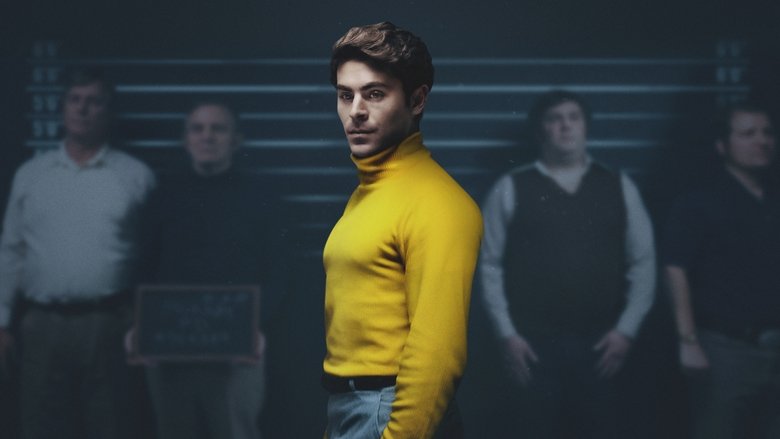
A chronicle of the crimes of Ted Bundy, from the perspective of his longtime girlfriend, Elizabeth Kloepfer, who refused to believe the truth about him for years.

7
1915


Movie Title

Extremely Wicked, Shockingly Evil and Vile

Moment

198 minutes

Release

2019-05-02

Kuality

FLV 1080p
HDRip

Genre

Thriller, Crime, Drama

language

English

castname

Jenilee
R.
Shannon, Dushku M. Laroche, Fatema D. Jolyn


[HD] [Watch] Extremely Wicked, Shockingly Evil and Vile Movie Rentals
Movie Rentals
Movie Rentals
Movie Rentals
2019


Film kurz

Spent : $578,050,955

Revenue : $638,697,599

Categorie : Wissen - Linguistik , Dialog - ironie frieden güte gehirn tier angriff wahrheit glück fordernd , Hochzeit - Mutter Stolz Apokalypse , Cartoon - Einfach

Production Country : Algerien

Production : MaXaM Productions


I think it's a hard line to walk, making a biopic about a genuine real-world serial killer and his wife, having said serial killer take up a pretty massive chunk of that biopic's screentime, and still not have it look as if you're trying to paint said serial killer as sympathetic - when you're a main character, when it's your story, you **are** the protagonist, and when the protagonist is a monster, that's... Yeah, that's a hard line to walk. And I think it's walked here falteringly. There's some very powerful moments, and it is absolutely an intriguing experiment in cinema, but I don't think it made all the best choices. I mean it's not a twist that Ted Bundy did it, 'cause all the world already knows... Well I mean, he's Ted Bundy. He's literally famous for one single thing, and it's being a murderer.

I can still recommend **Extremely Wicked, Shockingly Evil and Vile** to reasonable adults. Not a strong recommendation, but one nonetheless.

_Final rating:★★★ - I liked it. Would personally recommend you give it a go._
**_An interesting approach to the story, but the tone is poorly managed. Worth seeing for Efron's performance, though_**

>_I get very, very angry and indignant. I don't like being locked up for something I didn't do, and I don't like my liberty taken away, and I don't like being treated like an animal, and I don't like people walking around and ogling me like I'm some sort of weirdo, because I'm not._

- Ted Bundy; Interview in Garfield County Jail, Colorado (May 15, 1977)

> _Those of us who are, who have been so much influenced by violence in the media, in particular pornographic viol__ence, are not some kinds of inherent monsters. We are your sons and we are your husbands. And we grew up in regular families._

- Ted Bundy; Interview with James Dobson in Florida State Prison (January 23, 1989; the day before his execution)

> _He would walk me out to my car at two in the morning when my shift was over, and he'd say "Ann please lock your doors, I don't want anything bad to happen to you on the way home"._

- Ann Rule; "Ted Bundy" episode of _Born To Kill?_ (2012)

> _He ruined our lives and he's still part of our lives._

- Belva Kent, mother of victim Debra Jean Kent (February 16, 2005)

>_The reason I wanted to do this film is precisely because it avoided showing the violence. I'm much more interested in making a film about how a serial killer is living his life when he's not killing. To me, that deception and betrayal and manipulation is far scarier. Doing a movie about the fact that people can be in your midst and be killers is more interesting than just doing a movie about the catalogue of violence. Some people have criticised the lack of violence in the film as being disrespectful to the victims, saying we're glorifying a killer. I actually think the opposite, and I'm confused and surprised at the idea that someone showing the worst moment in somebody's existence - the moment where they're being tortured and killed – how showing that means you're not glorifying the killer. I think that's much more disrespectful to the victims of the violent crime. To me, you're glorifying the killer by showing the worst moment._

- Joe Berlinger; "Q&A: _Extremely Wicked_ Director Joe Berlinger Loves Zac Efron, Not Ted Bundy" (Brandon Katz); _Observer_ (May 3, 2019)

Directed by Joe Berlinger immediately after he completed work on _Conversations with a Killer: The Ted Bundy Tapes_, _Extremely Wicked, Shockingly Evil and Vile_ is a strange beast. A serial killer film which doesn't show any serial killing, it has been advertised as told from the perspective of a single character, but that character is one who's barely in the second half of the movie. Tonally, it's also unusual insofar as it seems for about 90% of its runtime to genuinely flirt with the notion that Bundy may have been the victim of a vast conspiracy. In reality, of course, given leeway by a judge out of his depth, granted privileges by a prison system unaware of how dangerous he really was, turned into an ironic folk hero by a media unused to such a charming and humorous breed of criminal, and supported by a cadre of women who judged him too good-looking to be a killer, Bundy was the first celebrity serial killer, and remains the best-known example of such (Charles Manson doesn't count as he wasn't a serial killer). And whilst the film is worth seeing for Zac Efron's performance if nothing else, it's a strangely muted affair, neither ghoulish warts-and-all carnage nor restrained psychological treatise. Telling the story of Bundy from the perspective of a woman who was oblivious to his true nature is an undeniably interesting narrative choice, and had Berlinger stuck to this format, it could have made for a fascinating film. However, the longer it goes on, the more it seems to revel in Bundy's flamboyance, and what begins as an intriguing insider's look at living with a killer soon shifts into an underwhelming courtroom drama, only returning to its original tone in the final (entirely fictional) scene.

The film begins in 1989, with Ted Bundy (Efron) on death row in Florida, still maintaining his innocence, although his execution is imminent. Visited by his former girlfriend, Liz Kendall (Lilly Collins), aka Liz Kloepfer, she demands he confess to his crimes so she can move on with her life. The film then returns to 1969, the night Bundy and Liz first met in a Seattle bar. As a single mother with a low-paying job, Liz is surprised to find this charismatic, handsome, and intelligent law student so interested in her, but interested he is, with the duo quickly falling in love, and Bundy treating both Liz and her daughter Molly extremely well. The film then jumps forward to July 1974. When two women are abducted in broad daylight from a packed Lake Sammamish State Park in Washington, the police issue a sketch of a man who resembles Bundy, saying the suspect may drive a yellow Volkswagen Beetle (which he does). The following year, when he is stopped in Utah for a minor traffic violation, the police find a "kidnap kit" in his car (ropes, handcuffs, ski mask, leather gloves, crowbar etc), and take him into custody, where he is positively identified by Carol DaRonch (Grace Victoria Cox), who had narrowly avoiding being kidnapped in November 1974. Bundy vehemently protests his innocence to Liz, claiming that DaRonch was shown his picture prior to the line-up, and although concerned, she accepts his explanations. After a bench trial, Bundy is found guilty of attempted kidnapping, and sentenced to one to 15 years. When he is subsequently charged with murder in Colorado, although she still believes him to be innocent, Liz starts to drink heavily to help her deal with the stress. However, as police departments across California, Oregon, Washington, Idaho, Utah, Colorado, and Florida start to connect Bundy to a string of recent murders, it becomes harder and harder for Liz to shake the feeling that there's more to her boyfriend than she could ever have imagined.

Very loosely based on Liz Kloepfer's memoir, _The Phantom Prince: My Life With Ted Bundy_ (1981), _Extremely Wicked_ is written by Michael Werwie, and had been on The Black List for several years before it came to the attention of Berlinger. The hook for the original script was that the audience is unaware the character they're watching is in fact Ted Bundy; the film was written as a supposedly fictional story of a young couple whose life is shattered when he is accused of multiple murders, with his real identity only coming as a final act twist. As Berlinger was completing _The Ted Bundy Tapes_, the script was offered to him, and although he found the twist distasteful, he loved the idea of looking at the Bundy story through the eyes of someone who thought him to be innocent. Known as a documentarian for films such as _Paradise Lost: The Child Murders at Robin Hood Hills_ (1996), _Metallica: Some Kind of Monster_ (2004), and _Whitey: United States of America v. James J. Bulger_ (2014), _Extremely Wicked_ is only Berlinger's second scripted film, after the fascinating misfire that was _Book of Shadows: Blair Witch 2_ (2000).

One of the biggest appeals of the movie, of course, is the unexpected casting of Zac Efron as Bundy (Efron also serves as executive producer). Known for his early roles in Disney films such as Kenny Ortega's original _High School Musical_ trilogy, and later comedies such as Nicholas Stoller's _Neighbors_ (2014), Dan Mazer's _Dirty Grandpa_ (2016), and Seth Gordon's _Baywatch_ (2017), aside from Lee Daniels's batshit insane _The Paperboy_ (2012) and Peter Landesman's ensemble piece _Parkland_ (2013), Efron has never really had a chance to show any dramatic chaps. And it has to be said, he's excellent here. Although he doesn't look like Bundy _per se_ (Bundy was good looking, he wasn't _that_ good looking), Efron has the mannerisms down to an absolute tee. If you watch the film after the docu-series, you'll really pick up on the depth of the performance, especially in the scene where the gloating Sheriff of Leon County, Ken Katsaris (Kevin McClatchy), indicts Bundy in front of the assembled media - Efron's every movement and gesture, every glance at the camera, the way he smiles, the way he stands, the tone of his voice, everything is perfect. Of course, Bundy's good looks and charisma were his most formidable weapons, and as a very attractive, very clean-cut, and very charming white man, Efron is able to tap into the fact that one of the most important aspects of the Bundy case was his white privilege (something which has been discussed by everyone from Robert D. Keppel to Ann Rule to Stephen G. Michaud). Bundy proved that evil could fester under an extremely attractive façade, and this gives Efron room to manoeuvre, playing every scene in such a way that the subtext is always apparent even though he never ostensibly lets Bundy's mask slip. Indeed, it's the absence of any obvious monstrousness in the performance which is so unnerving. As Liz, Lily Collins makes less of an impact, but that's because she has less to work with (more on this in a moment). Having said that, however, where Collins is especially good is in conveying how the seemingly never-ending series of accusations are having a cumulative effect; every time we see her, she looks wearier than before.

The film also features a fine supporting cast, all delivering strong, if restrained, performances; Kaya Scodelario as Carole Ann Boone (an old friend of Bundy's who ultimately became his wife and mother to his child), Angela Sarafyan as Joanna (Liz's (fictional) best friend), Haley Joel Osment as Jerry Thompson (Liz's (fictional) co-worker), James Hetfield as Officer Bob Hayward (who arrested Bundy in Utah in 1975), Jeffrey Donovan as John O'Connell (Bundy's attorney in the DaRonch kidnapping case in Utah), Dylan Baker as David Yocom (prosecutor in the DaRonch kidnapping case), Terry Kinney as Det. Mike Fisher (one of the lead investigators working the Colorado murders), and Jim Parsons as Larry Simpson (prosecutor in the Florida double murder trial). The only false note from an acting perspective is John Malkovich, who's spectacularly miscast as Edward Cowart, the presiding judge at Bundy's double-murder trial. Apart from the fact that Malkovich looks nothing like Cowart, he chews every bit of scenery anywhere near him, overacting to a painful degree. He's not quite as bad as he is in _Billions_, where he has the worst Russian accent I've ever heard from an actor not named Gary Oldman, but he's not far off (and I say that as a Malkovich fan).

One of the film's most notable components is that, apart from one brief scene near the end, there is no depiction of violence. Ostensibly this is Liz's story, and although Berlinger loses sense of that in the second half, he does adhere to the principle of not just keeping the violence off-screen, but of never showing us anything leading up to any of the murders, or any of the immediate aftermath. The idea, obviously enough, is to present Bundy not with the 20-20 hindsight of history, but with the same degree of ambiguity with which Liz would have viewed him. Indeed, if by some miracle someone stumbled on the film who knew nothing about Bundy, I'd imagine they would view it as a mystery thriller about a woman whose boyfriend may or may not be a killer. It's an interesting way into the story and seems a genuine attempt to do something more than simply reproduce the salacious details of the crimes, dwelling not on Bundy's sadism and savagery, but on his manipulations of the people in his life. In this sense, I'm sure it will disappoint those hoping for gory excess, scenes of decapitation, and copious necrophilia. Prior to the end, the closest the film really gets to the details of the crimes is a sequence of Bundy and Liz in relationship bliss, with 16mm home movie-style footage playing on-screen, over which we hear news reports about the murders.

Of course, if you're making a film about a serial killer which doesn't feature much in the way of serial killing, you're going to need to fill it with something, and in this sense, Berlinger focuses, at least in the first half, on how a killer can lie and manipulate, coming across as completely normal to all who know him (it's not mentioned in the film, but it is covered in the docu-series that The Church of the Latter-day Saints of Jesus Christ, which Bundy had joined shortly before his 1975 arrest, were so convinced of his innocence, they sent representatives to support him in court and publicly defended his character). With this in mind, the first half isn't really a true crime story so much as it is an examination of the lies a person capable of evil must tell to hide that capability. Berlinger himself has said that the film is about the mechanics of how a person can be "_seduced by someone capable of evil_", and it was his intention that the audience actually like Bundy, as he wanted them to feel disgust with themselves – just like Liz, Berlinger wanted them to be seduced by evil, and feel very uncomfortable with themselves for allowing it to happen.

However, as admirable as this approach is, the film has a lot of problems, some of which arise directly because of the unique entry point into the story. For one thing, because the film depicts Bundy not as we now know him but as his contemporaries saw him, it means we only see the performative side, never the monstrous underbelly. Sure, this means that the film avoids exploitation, but in doing so, it could be accused of sanitisation (to be fair, this is something of a damned if you do, damned if you don't scenario - show the murders and you're exploiting real-life suffering, don't show them and you're hiding the true nature of his crimes). And granted, portraying him as a possibly innocent man is part of the attempt to explain how Liz and the myriad of other women who supported him were essentially partaking in a form of mass self-delusion. However, all the good intentions in the world don't change the fact that the film's Bundy is a lovable rogue who bites his thumb at the system, not a murderer, a man who raped and butchered a 12-year-old child, and who decapitated multiple women and had sex with their corpses.

I understand that Berlinger wants to dramatise the reason that Liz and others were duped, depicting how she could have been blinded by devotion to a man that she thought (correctly, as it turned out) was too good to be true. But the problem is that she herself is never characterised enough for this to work. Indeed, one gets the impression that Berlinger doesn't find her especially interesting on her own – everything we learn about her is predicated on her relationship with Bundy; there's nothing about her life prior to meeting him, and what we learn about her life after he was convicted is primarily fictional. This is true to an even greater degree for Carole Ann Boone, who is introduced out of nowhere as an "old friend" of Bundy's, soon becoming his lover and supporter, and conceiving a child whilst he was on death row. Again, we learn nothing beyond her relevance to his story. Additionally, the focus shift halfway through as the film transitions from Liz as subjective focaliser to a more objectively focalised courtroom drama makes very little tonal sense. It's almost as if Berlinger loses interest in Liz when the sensationalist trial begins and Bundy really comes into his own. This transition reduces Liz to a cycle of watching the trial, crying, doubting his guilt, drinking, watching the trial, crying etc, as she's effectively stripped of what little agency she had in the first half.

Another problem created by telling the story from Liz's perspective is that we learn nothing new about Bundy himself; there's nothing about his childhood, for example, or how he got away with the murders for so long, whether he really loved Liz, or if he genuinely lacked the ability to feel empathy, as Dorothy Otnow Lewis, Professor of Psychiatry at the New York University School of Medicine, would claim in 1988 (something not covered in the film). Along the same lines, we learn nothing whatsoever about any of the victims. This was also a problem in the docu-series, but it's far more pronounced here, and because of this, the decision to put the names of Bundy's known victims on screen at the end of film is unearned, crass, and meaningless, coming as it does at the end of a film in which an A-list movie star has just portrayed their killer, whilst most of them are never even mentioned.

The film also makes some strange changes to documented fact, many of which seem designed to make Bundy more sympathetic. For example, there's no mention of the fact that he tried multiple times to pressure Liz into rough sex, particularly choking. The film also has Liz state that Bundy never raised his voice to her or laid a hand on her, ignoring an incident when he pushed her into a lake during an argument. Another scene sees Bundy forcibly restrained in his cell whilst a dentist takes impressions of his teeth. In reality, the impressions were taken in a dentist chair, and Bundy quite happily allowed the dentist to work, sitting down in the chair without any complaint. The film also shows him continuing to try to contact Liz throughout his incarceration, long after his marriage to Boone. In reality, however, he lost contact with Liz entirely in the early 80s, and there's no evidence he tried to find her, nor did she need to hear him confess in order to "move on". Ironically enough, if the film had stayed focused on Liz, these changes would have made more sense, as the entire film could be argued to be subjective. But because of the focal shift, one cannot make this argument, and such changes become more troubling.

_Extremely Wicked, Shockingly Evil and Vile_ is by no means a bad film. But it could have been so much better. The shift from subjective focalisation to court-room drama makes very little sense, and fundamentally undermines what Berlinger seems to have been trying to do. Much like the media which he is so keen to criticise (both here and in _The Ted Bundy Tapes_), and despite numerous statements to the contrary, he seems as enamoured of Bundy the showman as everyone else was and so many still are. Adopting a fascinating approach, the film initially looks at how evil can hide in plain view, creeping into our lives under the guise of normalcy, hiding monstrousness behind affection. Unfortunately, Berlinger allows this theme to recede into the background as he gives the narrative over to Bundy. And yet, he never manages to say anything new, raising the question of why anything needed to be said at all. If this was supposed to be Liz's story, Berlinger takes his eye off the ball badly, allowing the grandstanding, manipulative Bundy to hog the spotlight. And although the film doesn't sympathise with him, and although the decision not to show any of the murders is commendable, the fact is that like he was with the media of the time, like he has been with so many writers and in so many documentaries and scripted films over the last few decades, once again, Ted Bundy is very much the star of his own show.

[Watch] Little America Movie Rentals

[Watch] Little America Movie Rentals Little America -ordinary-man-claflin--teaser-Little America-accents-age-Dolby Digital-1080p-prisoner-a...